KZILA is a research and development studio. We don't take briefs and we don't write proposals. We pick an idea, build the thing, put it in front of actual humans, and find out whether they'll pay for it.
We make consumer AI products. Things a person can open on a Tuesday night without knowing what a model is, what a token costs, or why anyone is arguing about benchmarks.
Everything here is built for the general public. Not for enterprises, not for procurement departments, not for a client who needs three rounds of feedback before deciding on the shade of blue. There is no client. There is only the idea, the build, and the person on the other end.
Some of it works. Some of it quietly disappears. That's the deal with R&D — and it's the only part of this job that's actually interesting.
We fund ourselves, we decide ourselves, we're wrong ourselves. Nobody has to approve a roadmap that we were going to ignore anyway.
A product with three users teaches you more in a weekend than a strategy document teaches you in a quarter. We've read the strategy documents. We wrote some. Never again.
Not the demo, not the launch post, not the people clapping on the internet. Somebody using it on their own, unprompted, more than once.
Hobbies are fine. We have several. But a node that pays for its own compute earns the right to keep existing.
orbiting404.com is our factory. It's where a note in a group chat becomes a working thing with a domain, a payment link and, occasionally, a customer.
Each product is a node. Each node runs the same five stages. The stages don't change; only the idea does. That's the whole trick — we stopped reinventing the process so we could spend the energy on the thing itself.
Written down in one sentence. If it needs a paragraph, it isn't ready. If it needs a deck, it's dead.
Built small and built fast. Real code, real models, real cost per request known from day one.
Given to somebody who did not attend the meeting. This is where most ideas die, and they should.
The most honest form of feedback ever invented. Everything before this is a rehearsal.
Whatever survives becomes infrastructure for the next one. The factory gets faster every round.
Everything KZILA has put into the world, in the order the factory produced it. Live means strangers use it. Building means it exists and we're not talking about it yet.
You land, you move, and the world keeps generating itself around you. No prompt box, no settings panel, no explanation of what's happening under the hood — just somewhere to be for a while.
It was the first thing we built that a stranger paid for without us asking. That single transaction is the reason this studio exists in its current form.
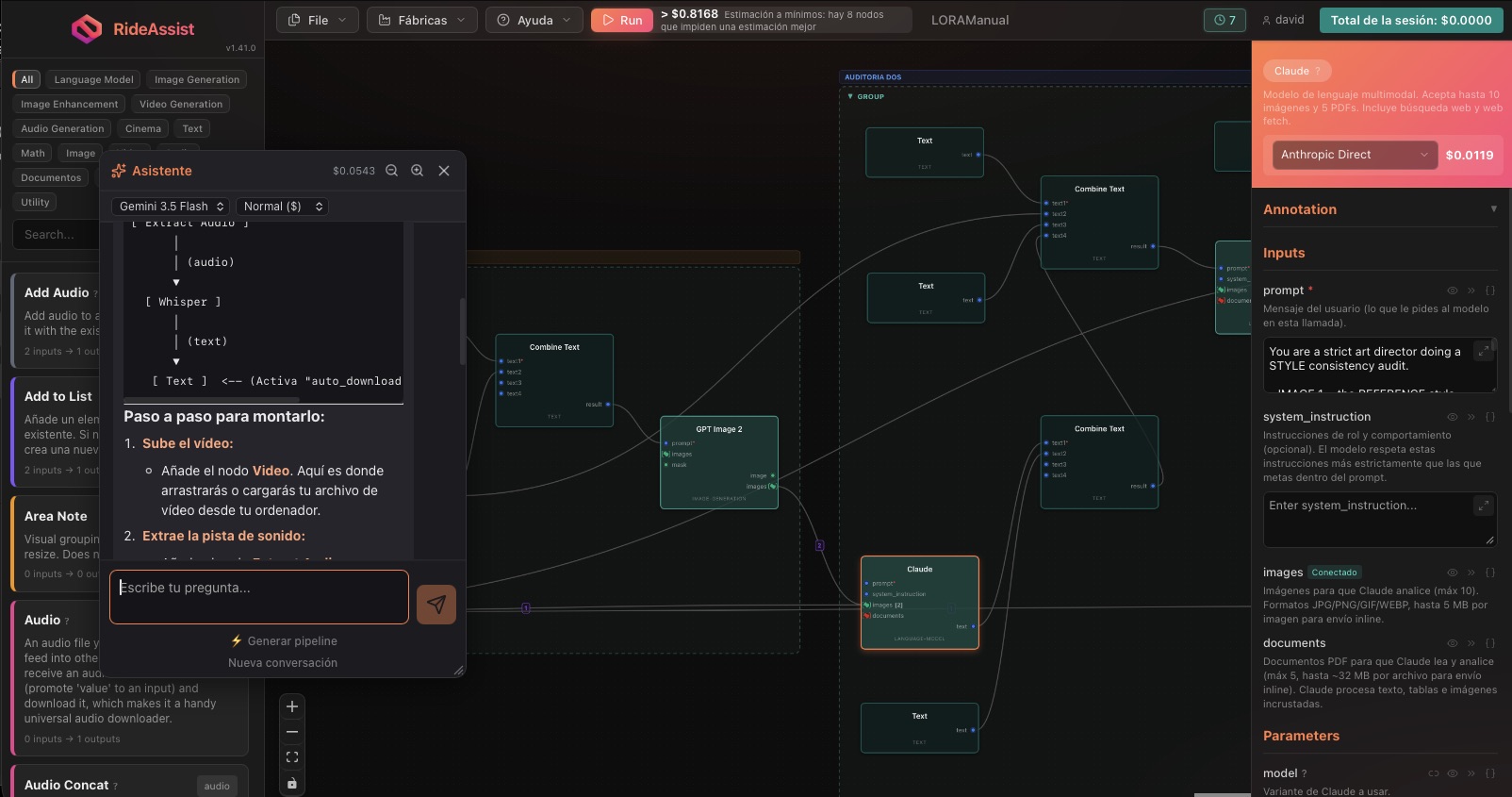
The plant. Every node gets assembled, launched and watched from here: cost per request, users this week, whether anything is on fire. It's the reason we can go from a sentence to a live URL in three weeks instead of three months.
It's password-protected and always will be. If you can see it, you're on the team — and if you're on the team, you already know it's held together with conviction.
It exists, it works, and three people use it every week. Beyond that we're not saying much, because the moment you describe an unfinished product in public it stops being R&D and starts being a promise.
It'll appear here with a domain and a screenshot the day a stranger pays for it. Not before.
Nothing, yet. It's forty-seven seconds of somebody talking too fast in a car, transcribed into one sentence that survived the week. That's the entire asset.
Every node here started exactly like this, which is either encouraging or a warning depending on how you feel about voice notes.
$ factory status --all node_01 pepoluniverse ● live stage 04 · paying node_02 orbiting404 ● live infrastructure node_03 [redacted] ● beta stage 03 · 3 users node_04 [sound] ○ idle stage 01 · 1 voice note clients connected: 0 briefs received: 0 decks written: 0 (all systems nominal)
Everyone here is over 40. We learned this job when shipping something took a team, a budget and a year. We've done the agency years, the client years, the reorganisation years. We know exactly how much of that was necessary — and it wasn't much.
Then the tools changed. What used to need twelve people now needs an afternoon and a clear head. The bottleneck stopped being execution and became taste: knowing what's worth building at all. That part takes twenty years, and it doesn't come in a model release.
So: same people, same judgement, absurdly better hands. That's the whole company.
Anyone can generate ten products a week now. Knowing which nine to throw away is the only scarce skill left, and it's the one you can't accelerate.
Nothing here runs longer than a few weeks before it meets a human. If it can't survive that meeting, more time wouldn't have saved it.
Two decades of waiting for approval will do that. There is no committee left to blame, which is either liberating or terrifying depending on the week.
Which is, we admit, an unusual thing for a website to say. If you want to see what the factory produces, use the products. If you want to build one with us, the only currency we accept is an idea worth the trouble.